Bayer CropScience et GLOBALG.A.P. intensifient leur coopération en vue d’améliorer les pratiques agricoles
9 February 2015
Des visiteurs d’Algérie, du Maroc, d’Egypte et de Tunisie à Agroexpo 2015
9 February 2015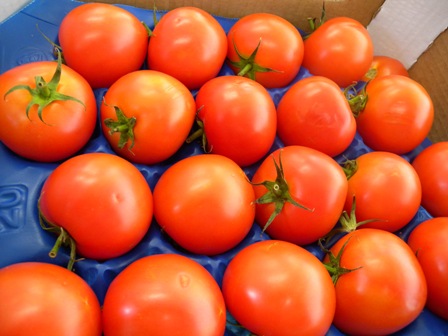
Morocco Tomato Exports have demonstrated a significant surge, with a 43% increase observed in Week 5 compared to the preceding week, according to data compiled by Hortoinfo from the Observatory of Prices and Markets of the Junta de Andalucía. This growth in exports highlights the increasing importance of Morocco as a key supplier in the European Union’s fresh produce market.
The Dynamics of Morocco Tomato Exports in the EU Market
The average price for Moroccan tomatoes exported under quota to the EU during the last week of January stood at 1.04 euros per kilogram. While this price represents a decrease of less than 14% compared to the previous week, it is noteworthy that it signifies a 100% increase when contrasted with the same period of the previous agricultural campaign. This price fluctuation is a critical indicator for understanding the market’s responsiveness to supply and demand, as well as external factors impacting agricultural trade. The total volume of Moroccan tomatoes exported to the EU during this period reached an estimated 13.89 million kilograms. This volume represents a substantial 43% increase from the week prior and an 11% rise compared to the same period in the 2013/14 campaign, underscoring the robust performance of Morocco Tomato Exports.
Looking at the entire month of January, the total volume of Moroccan tomatoes imported by the EU amounted to 47.51 million kilograms. This figure, however, shows an 11% decrease compared to the same period in the previous season. This nuanced data suggests that while short-term export volumes can experience significant week-on-week fluctuations, longer-term trends might present a more complex picture, influenced by factors such as seasonal variations, competition, and policy changes. The resilience and growth of Morocco Tomato Exports are further emphasized by these figures, positioning the country as a formidable player in global horticultural trade.
Agronomic Challenges and the Economic Landscape of Morocco Tomato Exports
The remarkable expansion of Morocco Tomato Exports is achieved against a backdrop of considerable agronomic challenges. Moroccan growers are increasingly confronting issues such as water scarcity, a critical concern in many agricultural regions of the country. The reliance on irrigation, often in areas with limited water resources, necessitates sophisticated water management techniques and investments in efficient irrigation systems. Furthermore, the rising cost of agricultural inputs, including fertilizers, pesticides, and energy for greenhouse operations, exerts significant pressure on production costs. These escalating expenses directly impact the profitability of farmers and can influence pricing strategies for exported produce. The dynamic interplay between these production costs and the prevailing market prices is crucial for the sustainability of the sector.
The “Cost Price” versus “Selling Price” dynamic is a cornerstone of understanding the economic viability of Morocco Tomato Exports. The cost price encompasses all expenditures incurred from seed to harvest and post-harvest handling, including labor, water, energy, fertilizers, packaging, and transportation. The selling price, on the other hand, is determined by market forces – supply and demand, competition from other exporting nations, quality standards, and the purchasing power of importing countries. When the selling price consistently exceeds the cost price, it allows for a healthy profit margin, encouraging further investment and expansion. However, when the selling price dips below or barely covers the cost price, it creates financial strain for producers, potentially leading to reduced planting, a decrease in quality, or even abandonment of farming activities. The observed increase in the average price of Moroccan tomatoes exported under contingent, despite a slight dip from the previous week, highlights the complex balancing act producers undertake to remain competitive while ensuring profitability. This situation also underscores the importance of market intelligence and strategic planning in managing price volatility. For an in-depth understanding of global food security and agricultural trends, consulting resources from the Organisation des Nations Unies pour l’alimentation et l’agriculture is highly recommended.
Market Context and Competitive Landscape
The performance of Morocco Tomato Exports is intrinsically linked to the broader European Union market, which represents a significant consumer base for horticultural products. Factors such as consumer preferences, regulatory standards, and the availability of produce from competing nations all play a role in shaping the market for Moroccan tomatoes. Countries such as Spain and the Netherlands are also major tomato producers and exporters to the EU. The ability of Moroccan exporters to maintain or increase their market share depends on their capacity to offer competitive pricing, consistent quality, and reliable supply chains. The agreement on agricultural quotas between Morocco and the EU, which governs the volume and pricing of imports, is a critical element in this competitive landscape. Understanding these external pressures is vital for stakeholders involved in Morocco Tomato Exports.
The weekly fluctuations in export volumes and prices, as reported by Hortoinfo, can be attributed to a confluence of factors. These include seasonal variations in production cycles, weather patterns in Morocco and competing exporting countries, and the specific demand dynamics within the EU during different periods of the year. The increase in exports during Week 5 suggests a strong demand or a successful response by Moroccan producers to capitalize on market opportunities. Similarly, the decrease in overall January imports compared to the previous year might indicate a shift in supply from other origins or a general recalibration of import strategies by EU buyers. Continuous monitoring of these trends is essential for effective business planning and for navigating the intricacies of international agricultural trade. The website HortiTecNews often provides valuable insights into such market dynamics.
The Courgette Market: A Comparative Perspective
In addition to tomatoes, the Moroccan export market for courgettes also exhibits interesting trends. During the week of January 26th to February 1st, Moroccan courgette exports to the EU under quota reached approximately 1.35 million kilograms, with an average price of 2.27 euros per kilogram. This average price remained relatively stable compared to the previous week. The volume exported under quota saw a 17% increase week-on-week, but a substantial 66% decrease compared to the same period in the 2013/14 campaign. By February 1st, the consumed volume of the courgette quota stood at 16.35 million kilograms, which is 50% less than in the preceding campaign. This comparison highlights that while Morocco Tomato Exports show robust growth, other produce categories may face different market pressures and export trajectories.
Frequently Asked Questions about Morocco Tomato Exports
Pourquoi le prix de la Morocco Tomato Exports augmente ?
L’augmentation du prix des tomates marocaines exportées peut être attribuée à plusieurs facteurs. Une demande accrue de la part des marchés européens, une offre potentiellement plus faible provenant d’autres pays producteurs en raison de conditions météorologiques ou de problèmes de production, ainsi que les coûts de production croissants pour les agriculteurs marocains (engrais, eau, énergie) contribuent à une hausse des prix. De plus, les accords de contingent et les tarifs douaniers peuvent également influencer le prix final sur le marché de l’UE.
Quels sont les principaux défis auxquels sont confrontés les exportateurs de tomates marocaines ?
Les principaux défis incluent la gestion de la rareté de l’eau, l’augmentation des coûts des intrants agricoles, la concurrence d’autres pays exportateurs, le respect des normes de qualité et de sécurité sanitaire strictes imposées par l’UE, et la volatilité des prix du marché international. La maintenance de la compétitivité demande une adaptation constante aux exigences du marché et une optimisation des processus de production et de logistique.
Quelle est l’importance des contingents d’exportation pour le Maroc ?
Les contingents d’exportation, négociés entre le Maroc et l’Union Européenne, sont essentiels car ils définissent les volumes de produits agricoles qui peuvent être importés dans l’UE à des tarifs préférentiels. Ces accords visent à équilibrer les intérêts des producteurs marocains et des agriculteurs européens. Le respect et l’optimisation de ces contingents sont cruciaux pour assurer un flux d’exportation stable et rentable pour le Maroc.